







by Juan Carlos Valda – jcvalda@grandespymes.com.ar
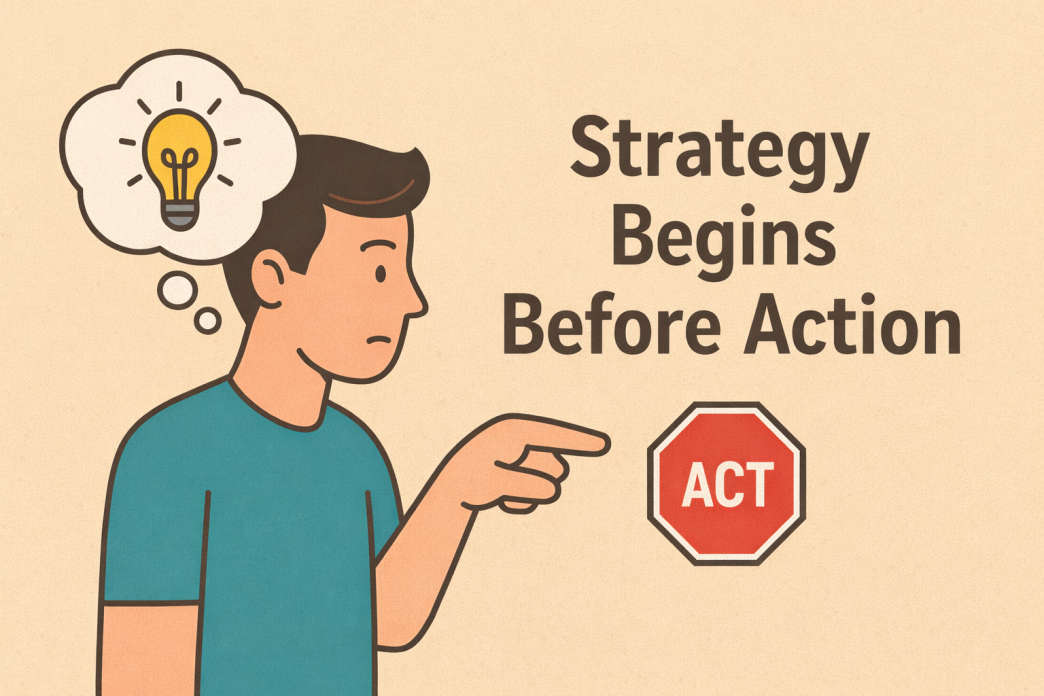
There are phrases that seem obvious until you look at them closely. One of them I once read in the Harvard Business Review: “Strategy begins with how you think.” And the more I observe it, the more I become convinced that this statement is at the root of many problems in SMEs. Most entrepreneurs believe that strategy is a plan, a budget, or a slide deck to convince the bank.
But real strategy doesn’t start with numbers or PowerPoints: it begins in the entrepreneur’s mind, in how they interpret reality, in how they choose to look at the business, problems, and opportunities. 
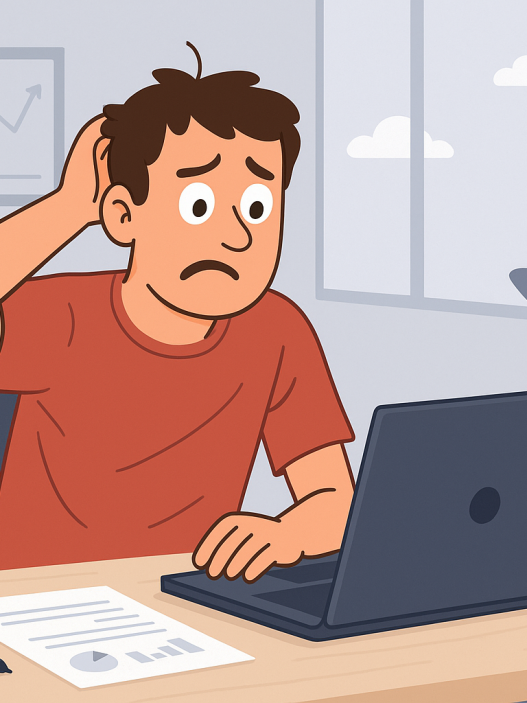
Companies do not fail for lack of action, but because of too much poorly thought-out action. In SMEs, this is commonplace: urgent decisions are made, day-to-day issues are reacted to, and action is taken more out of reflex than analysis. Interestingly, it often isn’t a lack of ability, but a mental structure that no longer works. Thinking in the same way in a different context is the quietest way to lose competitiveness.
The Trap of Operational Thinking
When a company is newly born, operational thinking is vital. The founder must be everywhere, solve problems, decide, improvise, attend to the customer, and make things work. This practical, nearly instinctive mindset gives life to the project. But over time, what was once an asset becomes a limitation. If the entrepreneur continues thinking the same way when the company has grown, they become their own obstacle.
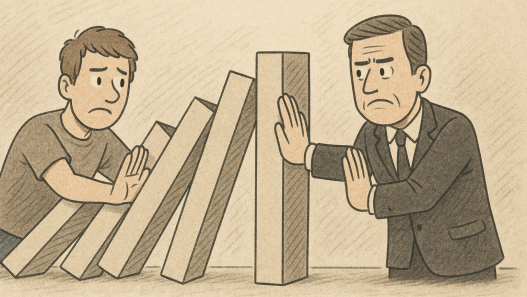
Many SME owners are surprised that despite their effort, the business doesn’t seem to move forward. What they don’t see is that the ceiling isn’t in the structure, but in the way of thinking. Operational thinking focuses on immediate action, solving the urgent, and putting out fires. Strategic thinking, on the other hand, seeks to understand causes, anticipate the fire, and design a system to prevent it. But for that, one must stop, observe, connect ideas, and project. And that is a luxury many entrepreneurs believe they cannot afford when in reality it is a necessity they cannot postpone.
Thinking Strategically Is Not Thinking Big: It’s Thinking Differently
The word “strategy” is intimidating. It seems reserved for multinationals, major consultancies, and MBAs. However, strategic thinking has nothing to do with company size and everything to do with the quality of questions you ask yourself. While operational thinking asks “How do I do this?”, strategic thinking asks “Why am I doing it?”, “For what purpose?”, and above all, “What happens if I don’t do it?”
This difference changes everything. Because a company does not transform by changing what it does, but by changing how it thinks about it. Strategic thinking is looking at the business from above, seeing patterns, connections, and consequences. It’s connecting the dots between commercial, financial, human, and cultural aspects. It’s realizing that selling more doesn’t always mean making more profit, and that growing without direction can be as dangerous as not growing at all.
An entrepreneur who manages to escape urgency and see their company as a system begins to discover things previously unseen: misdirected efforts, repetitive decisions, customers who no longer fit, areas that grow meaninglessly. And when that happens, the space for true strategy appears: one that doesn’t depend on the budget, but on thought.
Thought That Creates Reality
What one thinks determines what one does, and what one does ends up shaping reality. That’s why if the entrepreneur doesn’t change their way of thinking, their company won’t either. Every structure reflects the mind of the person who leads it. If the owner distrusts, the organization becomes rigid; if they are excessively controlling, the team depends on them for everything; if they don’t plan, no one else will.
In many SMEs, the entrepreneur says “I don’t have time to think.” But what they really lack is the habit of considering thinking as part of the work. Thinking is not an intellectual luxury, it is a management tool. When one doesn’t think, others think for them: the market, competition, and chance. In contrast, when one thinks strategically, one stops being a victim of circumstances and becomes the designer of one’s own destiny.
Strategy Is Design, Not Destiny
Strategic thinking does not mean predicting the future but designing possible paths to influence it. Strategy is not a statement of intent; it is a mental process that allows an entrepreneur to move with judgment, even amid uncertainty.
A good strategy is not copied or inherited: it is built by deeply understanding who you are, what value you can generate, and who truly cares about it. But to do that, you must first think. Not abstractly, but concretely: how the customer has changed, what opportunities are being ignored, what you do well but no longer adds value, and what should be stopped even if it hurts.
SMEs often fall into the mirage of movement. They believe that moving is progress and that filling the agenda is synonymous with advancement. However, speed without direction only leads to repeating the past with more exhaustion. Strategic thinking does not seek to do more things, but to do the right ones.
Culture Must Be Thought Out Too
Strategy not only defines what a company does, but how it does it. Therefore, thinking strategically also means thinking about culture. Culture is not a values poster; it is how people act when no one is watching. If an entrepreneur doesn’t think about culture, culture will think for them.
Every habit, every meeting, and every way of communicating builds the company’s identity. When an entrepreneur complains about lack of commitment or passivity among their people, what they see is the reflection of their own mental model. Culture influences profitability just as much as cost structure, yet few entrepreneurs realize it. SMEs that include culture in their strategy generate coherence, meaning, and motivation. Those that don’t live in conflict with themselves.
The Invisible Strategy: How People Think
Strategy is not only defined by the entrepreneur’s decisions but also by how employees think. In SMEs, every behavior reflects a belief transmitted by the leader. If the owner is impulsive, the team will act without reflection. If only results are valued, no one will stop to analyze the process. If mistakes are punished, no one will dare to innovate.
Thought is contagious. Therefore, a leader who wants a more strategic company must teach how to think strategically. It is not enough to tell people what to do; they need to understand how to reach a decision. Organizational maturity isn’t achieved with manuals but with conversations where people learn to look at the business together, read the numbers, and understand the impact of actions.
Rethinking the Entrepreneur’s Mind
Changing the way of thinking cannot be ordered by decree. It requires courage, humility, and time. Mental models are the result of years of experience, and for that reason they are hard to let go. But in today’s rapidly changing world, clinging to old certainties can be lethal.
Reeducating the mind means questioning your own assumptions, reviewing truths that worked in the past, and asking whether they still hold. It’s not about abandoning experience but updating it. An entrepreneur who doesn’t learn to think differently ends up repeating their best version of yesterday, and that in today’s market is the first step toward irrelevance.
Thinking is not stopping; it’s accelerating with direction. It’s not losing time; it’s gaining perspective. It’s not an unproductive pause; it’s an investment in clarity. Because at the end of the day, strategy begins with how you think, and if you don’t change the way you think, no amount of action — however intense — will change the outcome.